Quench Celebrates “Take Your Child to Work” Day

DSC 0626 2 300x201 Quench Celebrates Take Your Child to Work Day

Junior Staffers, from left, Ollie, Davis, Wyatt, Tyler, Caitlyn, Morgan, AJ, Destinee, Austin, and Allie, join Quench for the day.

Quench welcomed ten Junior Staffers for “Take Your Child to Work Day.” They enjoyed a tour of Quench’s warehouse facility in Trooper, PA where they learned how water coolers are tested and prepped for installation. They spent the balance of the morning a few miles down the road at Quench’s corporate headquarters in King of Prussia, PA, where they visited with the Service, Finance, Sales, and Marketing departments.  Before enjoying a pizza lunch, they held an “executive session” in the company’s board room to share their observations of the day:

On What Their Parents Do at Work . . .

  • Wyatt  “My mom plays on the computer all day”
  • Caitlyn  “My mom has two computer screens”
  • Ollie “I like it when my dad brings me to his office”
  • Tyler “My dad gets to work with the marketing people”
  • Allie “I didn’t know my mom eats pizza”

On Why Drinking Water is Important . . .

  • Wyatt  “It’s bad to drink salty water”
  • Davis “You need to drink water to survive”
  • Morgan “It’s refreshing”
  • Austin “It’s hydrating”
  • Caitlyn “It’s good for you”
  • Tyler “It needs to be pure”
On the Most Memorable Part of the Day . . . 
  • Davis “Seeing how they fix things in the warehouse”
  • Wyatt  “The really big fan in the warehouse — it’s bigger than my room!”
  • Tyler “I watch them test to make reverse osmosis water”
  • Allie  “The bagels”
  • Austin “There were lots more people than I thought”
  • Morgan “I liked finding ‘ecofriendly’ in the Word Search”
  • Ollie “I watched them clean a Quench machine”
  • AJ  “Melting cups with the hot water . . . and the bagels”
  • Destinee “I liked the bagels too!”
Thanks to all the young Quenchers who participated . . . we’ll be looking for you to join our Training Program in 2021!


Quench Supports Toys for Tots

photo2 300x224 Quench Supports Toys for Tots

Quench staffers Diana Dempsey, Denise Peronace, Nancy Fisher, Derek Longo, and Josh Henry with the Toys for Tots collection.

Quench welcomed the holiday season by collecting more than four dozen toys for the U.S. Marine Corps Reserve’s Toys for Tots program.  The toys will be distributed before Christmas to less fortune children in the community.This is the latest community service project organized by Quench staffers.  Other recent  efforts have included fundraising events for Hurricane Sandy Relief and The American Cancer Society,and a Red Cross Blood Drive in which Quench donated 30 pints of blood.

Countertop Water Coolers – The Better Alternative

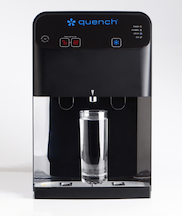
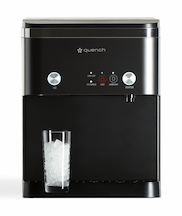
640 big picture Countertop Water Coolers   The Better AlternativeWhen you think of water coolers, do you picture the large, tall bottled water coolers?  Probably – they’ve been around forever and have become icons.  Quench wants to change that with our bottleless solutions.

Water coolers don’t have to be big.  Every countertop water cooler we carry is small enough to fit just about anywhere, and still provide the endless fresh water and 5-stage filtration you’ve come to expect from a Quench cooler.  With sleek styles, they also don’t need to be eye sores.  We think water coolers can be more than the antiquated office fixtures they’re usually perceived as.

Continue reading

New Infographic – The Importance Of Water Filtration

Unfortunately, some people take clean water for granted.  The reality is that many drinking sources are still unsafe.  The answer is filtration.  We’ve built this infographic to help share  some knowledge on the benefits of filtration.

See the water filtration infographic here.  Please share.  Also, be sure to check out our Pinterest page for more great water infographics, or our main website for more information on Quench’s unique form of drinking water delivery.

infog New Infographic   The Importance Of Water Filtration

Vassar Expands Crusade to Ban the Bottle

Vassar College Seal Vassar Expands Crusade to Ban the BottleJust six months after successfully lobbying to ban bottled water sales at all the school’s cafeterias, the student government group of Vassar College continues to push forward with anti-bottle, pro-tap water initiatives.

Tap water advocacy-campaign, Tap That, and student-led environmental organization Vassar Greens, largely responsible for Vassar’s bottleless movement, are now encouraging the student government to expand its bottle ban to off-campus events and, more specifically, vending machines.

 Vassar Expands Crusade to Ban the BottleVassar Greens continues the push to go totally bottleless by encouraging people to go a step further and pass up 5-gallon water coolers for a refreshing drink from the nearest refilling station or bottleless water cooler.

To highlight and support the water bottle ban, the school handed out Vassar-branded stainless steel water bottles to all registered freshmen at the beginning of this year.

Continue reading

What a Fracking Accident Looks Like

While many may be aware of the dangers of drilling for oil and natural gas, it is rare that we get to witness an actual accident, one of the thousands that oil and gas drilling has been responsible for over the course of the past ten years.

While this accident was in British Columbia and caused by a supervisor’s misdirection, it still serves as an excellent example that even the minutest mistake can cause a major incident. What do you think? Are all the risks associated with fracking worth it?

Quench Suits Up for National Breast Cancer Awareness Month

  Quench Suits Up for National Breast Cancer Awareness MonthIf you’ve been outside enjoying the weather recently you’ve probably noticed a few things; the leaves melting from green to golds, reds and browns; the return of wooly scarves and knit hats; and of course, the familiar sight of bright pink ribbons on hats, lapels and jackets. Time for National Breast Cancer Awareness Month!

October (also National Italian-American Heritage Month, National Popcorn Poppin’ Month, and National Pasta Month!) has been celebrated as National Breast Cancer Awareness Month worldwide since 1985.

Henry and Longo on Lee Denim Day 150x150  Quench Suits Up for National Breast Cancer Awareness Month

Account Manager Derek Longo and Account Specialist Joshua Henry enjoy their day in denim.

Since NBCAM’s inception, millions and millions of dollars have been raised by different organizations and collaborators through various races, walks and donations, to raise awareness that mammograms are effective cancer prevention tools. At Quench, we’re making sure to do our part, too!

For the month of October, Quench employees were offered to participate in Lee Denim Day. Since its start way back in 1996, Lee National Denim Day has proudly raised more than $86 million in donations to help the American Cancer Society discover new ways to find, treat, prevent, and cure breast cancer while ensuring access to mammograms and providing free support to people with the disease.

This year was Quench’s first time participating in Lee Denim Day and so far 35 of the 80 employees at our  King of Prussia headquarters have donated at least $5.

Peronace and Whittemore on Denim Day1 150x150  Quench Suits Up for National Breast Cancer Awareness Month

Account Manager Denise Peronace and CST Manager Lorraine Whittemore support the pink while showing off their blue (jeans).

The return? Getting to wear their favorite pair of comfy jeans to work! Employees could opt to donate $5 for one blue-jean Monday or $15 to wear their jeans every Monday of the month. We’ve raised $530 so far and are continuing to accept donations through the month.

So whether you walk, bike, wear a pink pin, or your favorite pair of jeans, make sure to show your support for NBCAM. Keep up the quenchy work, everyone!

The Clean Water Act Celebrates Its 40th Birthday

 The Clean Water Act Celebrates Its 40th Birthday

Garbage along a riverbank in 1973, before the Clean Water Act.

It’s hard to believe that the Clean Water Act has been around for forty years already. But when you imagine what the country’s water infrastructure would be without such a piece of legislation, it’s easy to see why it was a necessary Act.

In addition to regulating the type and amount of pollutants allowed in wastewater, the CWA also set important water quality standards for all contaminants in surface waters.

As a direct result of the CWA, many aging pipelines and sewers across the nation got a much-needed facelift and there are still an abundance of plans to upgrade aging water infrastructure that are underway today.

 The Clean Water Act Celebrates Its 40th Birthday

Earth Day rally, 1990.

While the Clean Water Act is not a favorite of businesses, which were initially designed in a time when things like the environment were not considered, it has helped states, communities, and waterways nationwide to enjoy a cleaner, higher-quality water both for drinking and for recreation.

The first evaluation of the Clean Water Act’s effect on California’s coastal waters revealed huge decreases in lead, copper and cadmium. Put simply, the concentration of metals in the waters off Los Angeles is now equal to that of the water along a remote stretch of Mexico’s Baja Peninsula.

A Few Clean Water Facts:

  • The CWA can be traced back to The Rivers and Harbors Act of 1899, which “prohibited the discharge of pollutants or refuse into or on the banks of navigable waters without a permit.”
  • More than half the nation’s waterways now meet the standards set in the CWA.
  • Originally, the government-planned deadline to eliminate discharges of pollutants into U.S. waters was 1985. Needless to say, the deadline was not met.
  •  The largest fine ever paid because of the CWA was $12.6 million by Smithfield Foods in 1997.
  • “Pollutants” include solid waste; incinerator residue; sewage; garbage; sewage sludge; munitions; chemical wastes; biological materials; radioactive materials; heat; wrecked or discarded equipment; rock; sand; cellar dirt; and industrial, municipal, and agricultural wastes.

For information on how to get involved in preservation of the Clean Water Act you can visit CleanWaterAction.org.


How to Diagnose Common Tap Water Problems

 How to Diagnose Common Tap Water ProblemsDo you suffer from cloudy, smelly or discolored tap water? Does your tap water leave a bad taste in your mouth? If you answered yes to any of these questions than you need to check out the new info sheet from the Massachusetts Department of Environmental Protection.

The most common problems found in tap water are grouped into three categories: color, taste and odor. Your tap water quality can vary according to the region you live in and is also effected by how old your pipes are and what kind of filter system you use, among other factors.

The American Midwest is an area commonly known to have higher levels of pesticide and herbicides in its water while Florida’s coastal tap is locked in battle with ever-encroaching salt water.
 How to Diagnose Common Tap Water ProblemsWhile the resource does not give specific courses of action to deal with certain problems, there are private drinking water tests offered nationwide. One surprising fact from the info sheet was that a corrosion problem may be present in your pipes even though every single faucet may not be effected.

Sometimes the fix to a tap water problem can be as simple as changing the black, rubber connector-hoses from your water heater or replacing a filter cartridge. But unless you check it out, you’ll never know for sure. So next time you see floaties in your water or you can smell your drink before you taste it, check out the info sheet from MassDEP and don’t waste another minute wondering.